
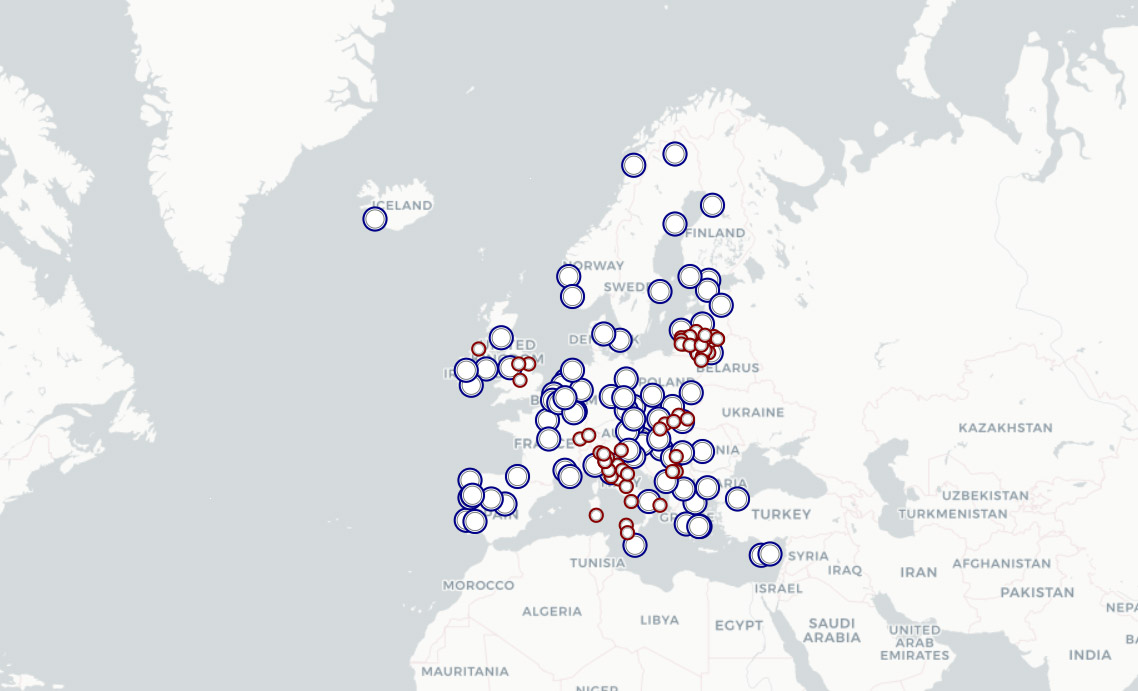
Each year, one European city -occasionally more- earns the right to call itself a capital: not of a country, but of culture itself. For twelve months, a title, a budget, and a spotlight land on a place, before moving on to the next one, leaving behind lasting impacts on local and regional cultural sectors. This map traces that pattern, starting with the very first title awarded in 1985 (Athens).
Latest
- A Year in the Spotlight: Europe's Cultural Capitals Landscape
- Cultural Observatories Worldwide: A Map for Reading Culture
- Globetrotters. A Repertory of World Travelers, 1850-1945
- Giving a Voice to the Past: Intangible Heritage and Forgotten Territories
- Overtourism vs. undertourism: concepts, impacts and management strategies for contemporary tourism
Impressum
Copyright 1999-2026, www.rhpositive.net
Contact info@rhpositive.net
Source citation "Roland Hochstrasser, www.rhpositive.net"
Images Roland Hochstrasser unless otherwise specified
Translations Openai ChatGPT