

The media can’t waste time on stories that won’t pass our attention filter.
Here are a couple of headlines that won’t get past a newspaper editor, because they are unlikely to get past our own filters: “MALARIA CONTINUES TO GRADUALLY DECLINE.” “METEOROLOGISTS CORRECTLY PREDICTED YESTERDAY THAT THERE WOULD BE MILD WEATHER IN LONDON TODAY.” Here are some topics that easily get through our filters: earthquakes, war, refugees, disease, fire, floods, shark attacks, terror attacks. These unusual events are more newsworthy than everyday ones. And the unusual stories we are constantly shown by the media paint pictures in our heads. If we are not extremely careful, we come to believe that the unusual is usual: that this is what the world looks like.
For the first time in world history, data exists for almost every aspect of global development. And yet, because of our dramatic instincts and the way the media must tap into them to grab our attention, we continue to have an overdramatic worldview. Of all our dramatic instincts, it seems to be the fear instinct that most strongly influences what information gets selected by news producers and presented to us consumers.
- Details
- Hits: 1791

Governments of the Industrial World, you weary giants of flesh and steel, I come from Cyberspace, the new home of Mind. On behalf of the future, I ask you of the past to leave us alone. You are not welcome among us. You have no sovereignty where we gather.
- Details
- Hits: 1786

Prosper-René Blondlot (1849–1930) was an accomplished French physicist who received three prizes from the Académie des Sciences for his work in electromagnetism. Despite this, he is best known for his role in one of the classic scientific blunders of modern times. In 1895 German scientist Wilhelm Röntgen discovered X-rays, electromagnetic radiation with a wavelength ranging from 0.01 to 10 nanometers. This discovery made Röntgen famous and brought significant prestige to the German physics community. The discovery also created the expectation that other forms of electromagnetic radiation would soon be discovered, and many physicists, including Blondlot, sought to do just that. It was therefore not surprising when, in 1903, Blondlot announced the discovery of another source of radiation that he named N-rays (after his birthplace, Nancy, France, and his university). Between 1903 and 1906 no less than three hundred papers on N-rays were published in the scientific literature, involving about a hundred scientists and medical researchers. At least forty scientists claimed to see these N-rays. Blondlot reported that N-rays were produced by many types of matter, both living and inert (everything except green wood and some treated metals), and that their strength increased with the “psychic activity” of the source. His experimental setup included a hot wire inside an iron tube to generate the N-rays, which were then refracted through a 60-degree angle prism of aluminum, and in turn were detected by a calcium sulfide thread that would glow slightly. The subtle glow could only be perceived in the dark by those with sharp vision. Other researchers discovered much about the properties of N-rays: They could apparently penetrate metal and wood but were blocked by water. Medical scientists discovered they were emitted by muscles and the human brain and hoped they would be as useful in medical diagnosis as X-rays were turning out to be. It was discovered that N-rays could be transmitted over a wire. The science of N-rays was taking off, but there was one slight problem. N-rays do not exist. All of this research was nothing more than self-deception.
(...)
The story of N-rays is a classic cautionary tale of pathological science, bias, and self-deception among otherwise accomplished scientists. And yet the story is not nearly as well known as it should be. The French scientists ignored many red flags that should have stoked their own skepticism. In science it pays to be one’s own most vehement critic and greatest skeptic. This means trying earnestly to prove your own hypothesis wrong, and tentatively accepting it only to the degree that it survives dedicated attempts at doing so.
- Details
- Hits: 1755
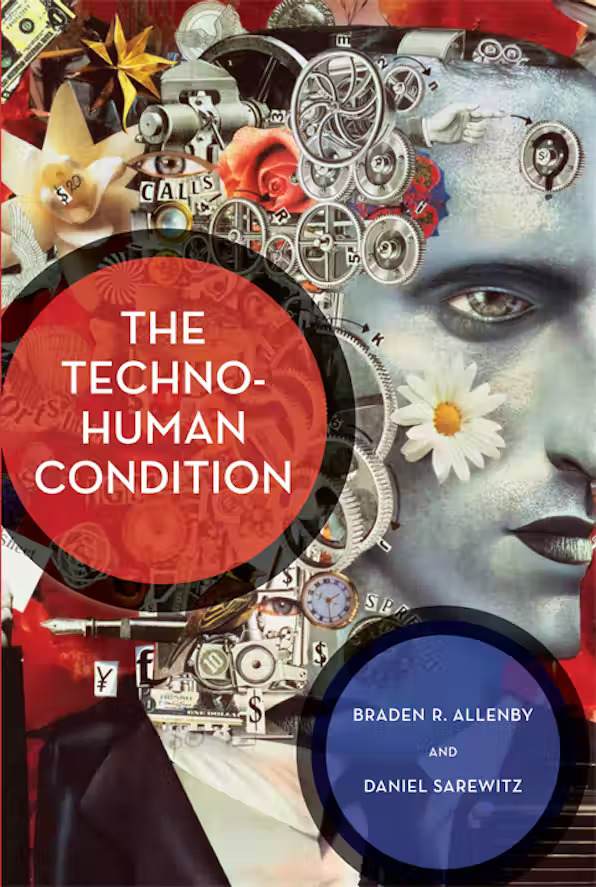
The most poignant exemplar of this addictive behaviour today is the social response to climate change, in which enormous scientific, intellectual, political, diplomatic, and emotional resources have been mobilized to violate all our precepts on a magnificent scale in a top-down, knowledge-based control fantasy aimed at modifying the evolution of the coupled human-Earth system in particular ways.
- Details
- Hits: 1743