
This article explores how Dubai has constructed its future-oriented urban imaginary through architecture, mega-events and cultural narratives, positioning itself as a laboratory for global visions of modernity.
- Details
- Hits: 3722
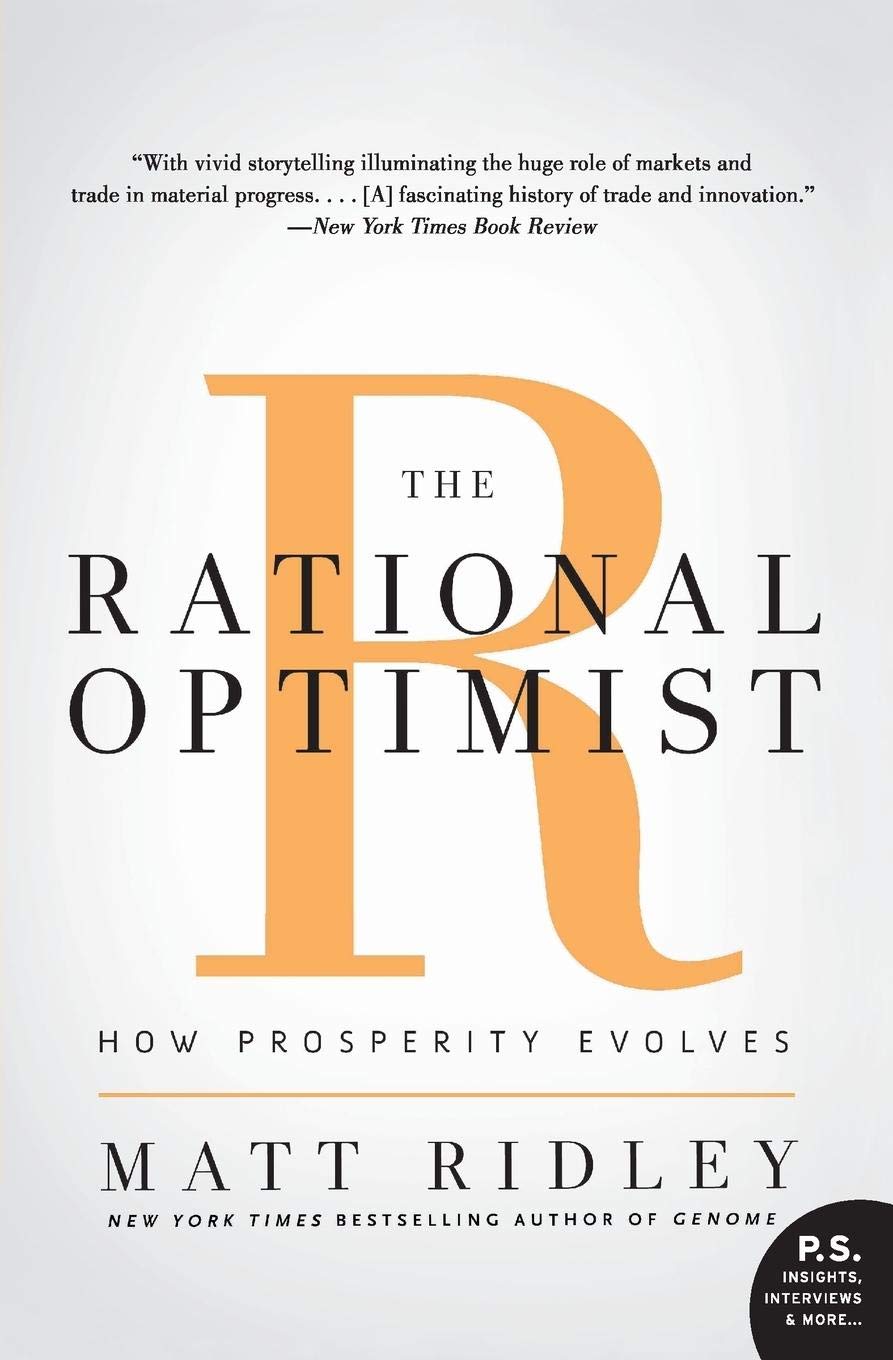
Throughout the half-century between 1875 and 1925, while European living standards shot up to unimaginable levels, while electricity and cars, typewriters and movies, friendly societies and universities, indoor toilets and vaccines pressed their ameliorating influence out into the lives of so many, intellectuals were obsessed with imminent decline, degeneration and disaster. Again and again, just as Macaulay had said, they wailed that society had reached a turning point; we had seen our best days.
- Details
- Hits: 3100

On the first day of class, Jerry Uelsmann, a professor at the University of Florida, divided his film photography students into two groups.
Everyone on the left side of the classroom, he explained, would be in the “quantity” group. They would be graded solely on the amount of work they produced. On the final day of class, he would tally the number of photos submitted by each student. One hundred photos would rate an A, ninety photos a B, eighty photos a C, and so on.
Meanwhile, everyone on the right side of the room would be in the “quality” group. They would be graded only on the excellence of their work. They would only need to produce one photo during the semester, but to get an A, it had to be a nearly perfect image.
At the end of the term, he was surprised to find that all the best photos were produced by the quantity group. During the semester, these students were busy taking photos, experimenting with composition and lighting, testing out various methods in the darkroom, and learning from their mistakes. In the process of creating hundreds of photos, they honed their skills. Meanwhile, the quality group sat around speculating about perfection. In the end, they had little to show for their efforts other than unverified theories and one mediocre photo.
It is easy to get bogged down trying to find the optimal plan for change: the fastest way to lose weight, the best program to build muscle, the perfect idea for a side hustle. We are so focused on figuring out the best approach that we never get around to taking action. As Voltaire once wrote, “The best is the enemy of the good.”
(This story comes from page 29 of Art & Fear by David Bayles and Ted Orland. In an email conversation with Orland on October 18, 2016, he explained the origins of the story. “Yes, the ‘ceramics story’ in ‘Art & Fear’ is indeed true, allowing for some literary license in the retelling. Its real-world origin was as a gambit employed by photographer Jerry Uelsmann to motivate his Beginning Photography students at the University of Florida. As retold in ‘Art & Fear’ it faithfully captures the scene as Jerry told it to me—except I replaced photography with ceramics as the medium being explored. Admittedly, it would’ve been easier to retain photography as the art medium being discussed, but David Bayles (co-author) & I are both photographers ourselves, and at the time we were consciously trying to broaden the range of media being referenced in the text. The intriguing thing to me is that it hardly matters what art form was invoked—the moral of the story appears to hold equally true straight across the whole art spectrum (and even outside the arts, for that matter).” Later in that same email, Orland said, “You have our permission to reprint the any or all of the ‘ceramics’ passage in your forthcoming book.” In the end, I settled on publishing an adapted version, which combines their telling of the ceramics story with facts from the original source of Uelsmann’s photography students. David Bayles and Ted Orland, Art & Fear: Observations on the Perils (and Rewards) of Artmaking (Santa Cruz, CA: Image Continuum Press, 1993), 29.)
- Details
- Hits: 2944
In the mid-1970s it was briefly fashionable for journalists to write scare stories about the recent cooling of the globe, which was presented as undiluted bad news. Now it is fashionable for them to write scare stories about the recent warming of the globe, which is presented as undiluted bad news. Here are two quotes from the same magazine three decades apart. Can you tell which is about cooling and which about warming? The weather is always capricious, but last year gave new meaning to the term. Floods, hurricanes, droughts – the only plague missing was frogs. The pattern of extremes fit scientists’ forecasts of what a ——world would be like. Meteorologists disagree about the cause and extent of the ——trend, as well as over its specific impact on local weather conditions. But they are almost unanimous in the view that the trend will reduce agricultural productivity for the rest of the century ... The longer the planners delay, the more difficult will they find it to cope with climatic change once the results become grim reality. The point I am making is not that one prediction proved wrong, but that the glass was half empty in both cases. Cooling and warming were both predicted to be disastrous, which implies that only the existing temperature is perfect. Yet climate has always varied; it is a special sort of narcissism to believe that only the recent climate is perfect. (The answer by the way is that the first one was a recent warning about warming; the second an old warning about cooling – both are from Newsweek.)
- Details
- Hits: 2448